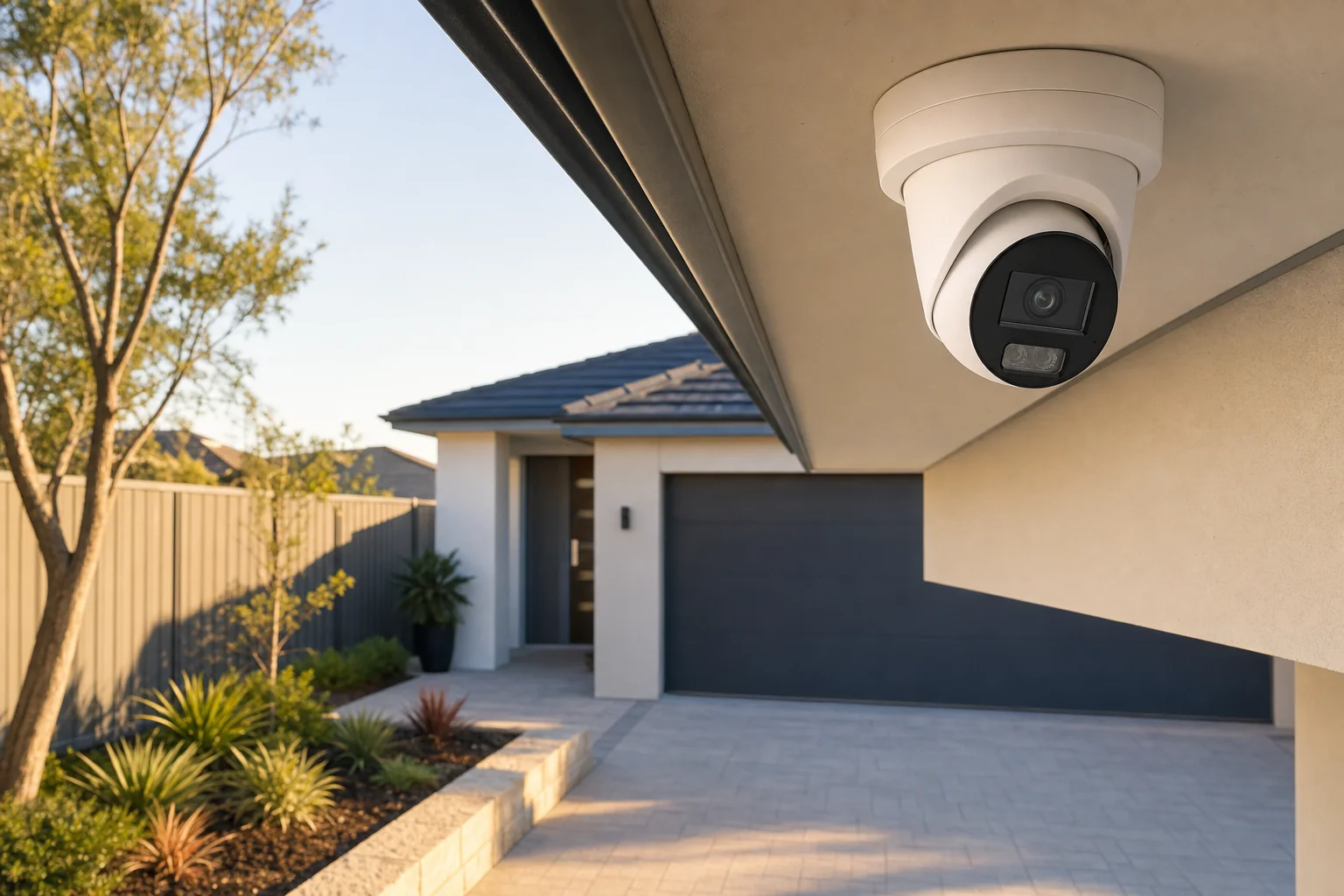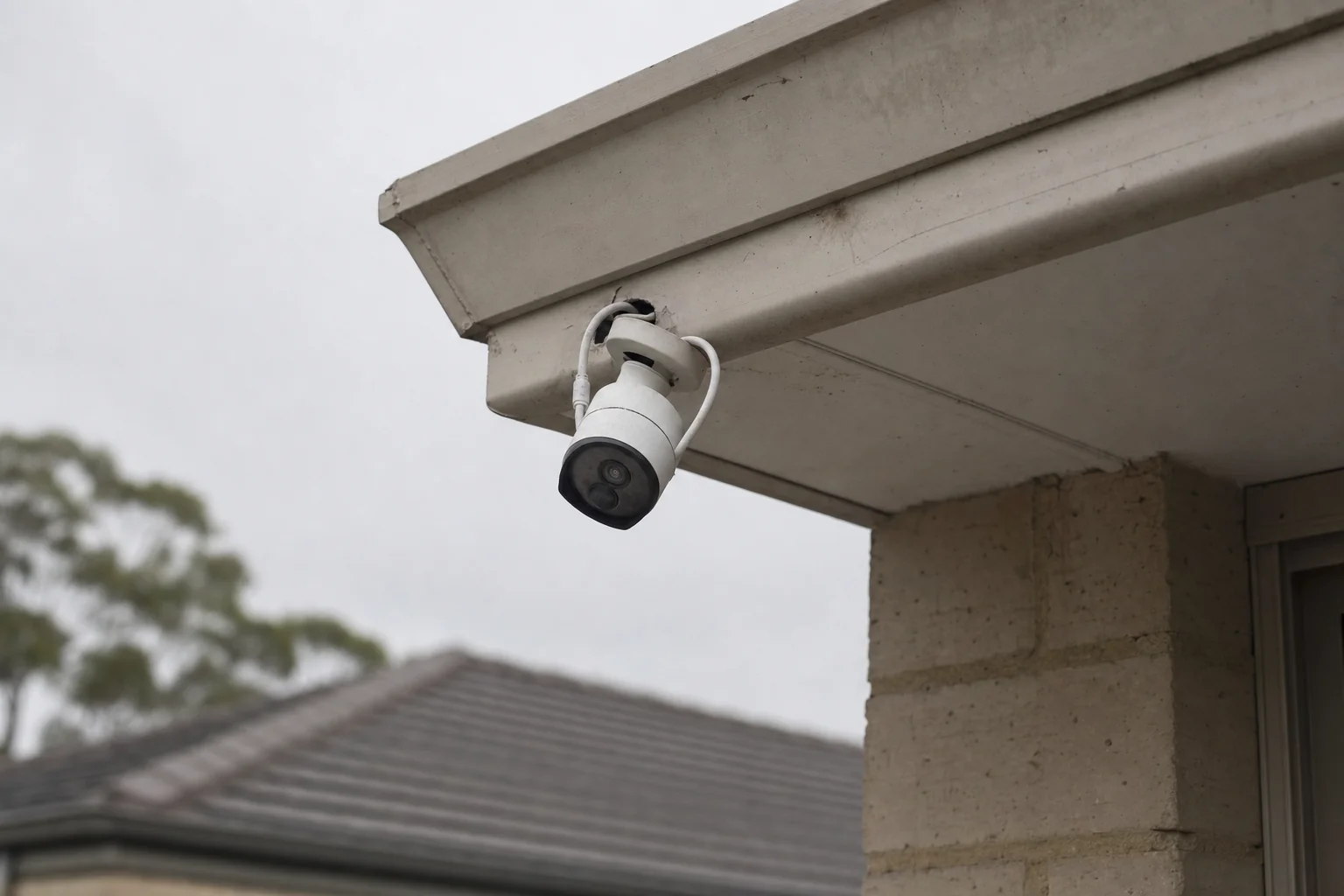
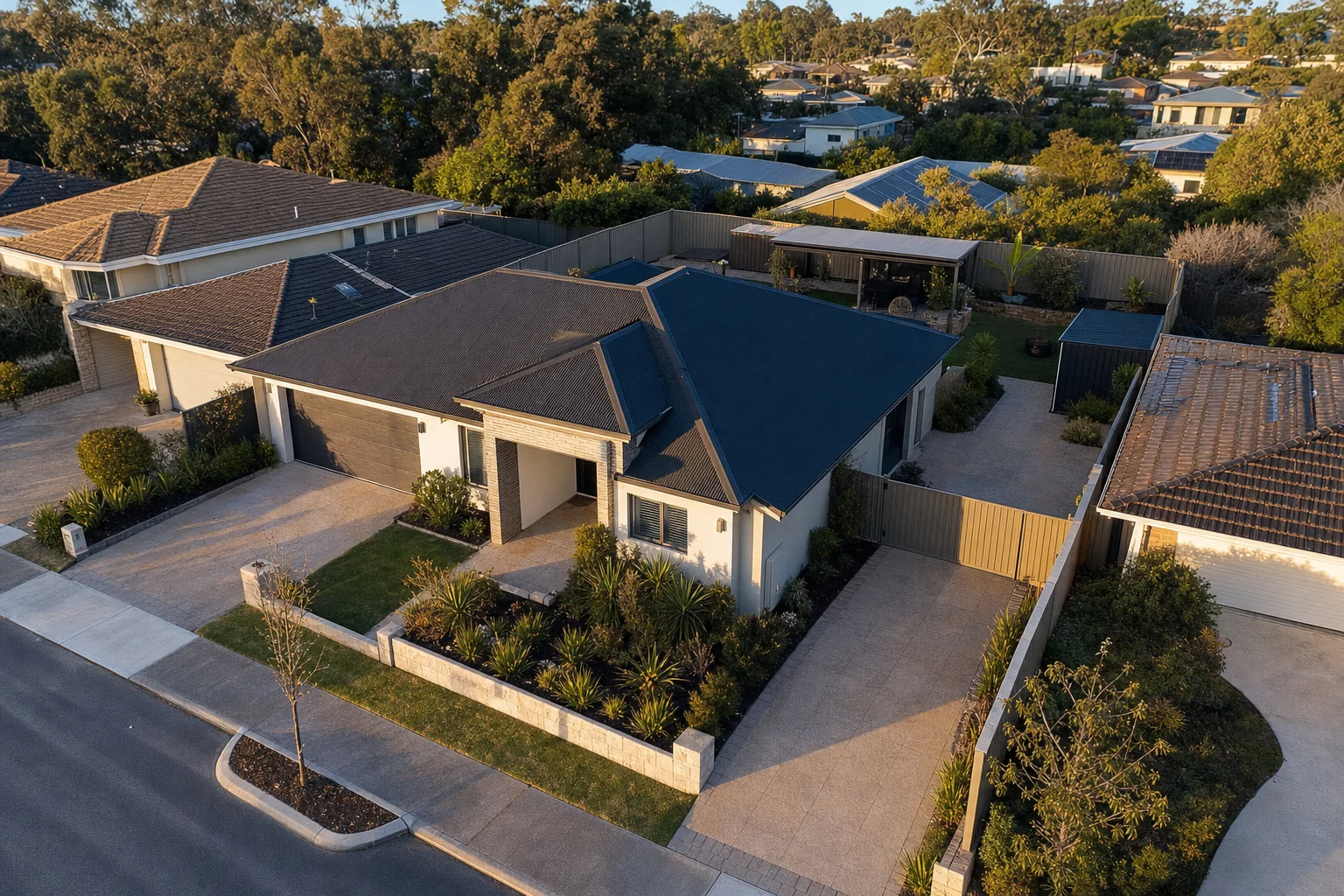
How Many CCTV Cameras Do I Need for My Perth Home
8 min readHome CCTV Perth
The short answer
The number of cameras a home needs comes from counting the ways onto the block, not from picking a four pack or an eight pack off a shelf. A standard single storey Perth house with a front, one side gate and a back yard is often well covered by four cameras, while corner blocks, two storey homes, rear laneways and second driveways need more. Your recorder's channel count and hard drive size set the practical ceiling, so both get decided at the same time as the camera count.
Summarise with AI
Key Highlights
- Count entry points and the paths between them, then place a camera on each one
- Four cameras covers a lot of standard single storey Perth homes
- Corner blocks, battle axe blocks and rear laneways push the number up
- A four channel recorder takes four cameras and no more, so the fifth camera means a new recorder
- More cameras and higher resolution both eat into how many days of footage you keep
- A camera that duplicates another camera's view is a camera you did not need
Count Entry Points, Not Walls
Camera packs are sold in fours and eights because those are tidy numbers to box up. Your house was not designed around a box.
The number you need comes from how many ways there are onto your block and how many paths run across it. Every one of those wants a camera on it, and everything else is optional.
- The front door and the path leading to it
- The driveway, from the kerb to the garage
- Each side gate, counted separately, because plenty of Perth homes have two
- The rear boundary where it backs onto a laneway, reserve, park or oval
- The garage or workshop, if what is stored in there is worth watching
- Any second street frontage, which corner blocks always have
Write that list down before anyone starts talking about camera models. It usually comes out at somewhere between three and eight on a suburban Perth block.
What Four Cameras Actually Covers
Four is the number that suits a lot of standard single storey Perth homes, and it is worth understanding why rather than taking it as a default.
| Camera | Covers | Why it earns its place |
|---|---|---|
| Front door | Faces at close range, deliveries, anyone who knocks | The highest quality identification shot on the house |
| Driveway | Vehicles, plates, the verge and whoever gets out | Most activity at a house arrives or leaves by the driveway |
| Side access gate | The route from the front of the block to the back | It is the pinch point almost everyone has to use |
| Rear alfresco | Back doors and windows, the yard, the shed | The part of the property nobody can see from the street |
Scroll the table sideways to see every column.
Those four cover the front, the back and the join between them. On a rectangular block with a fence, one gate and a single frontage, that is genuinely most of it.
Four cameras, not a four camera pack
The number being the same does not make them the same thing. A pack gives you four identical cameras with identical lenses. A planned set of four might use a wider lens on the narrow side run and a different angle on the driveway, because those two positions are doing very different jobs.
When a Perth Block Needs More Than Four
Plenty of Perth blocks are not the standard rectangle, and the ones that are not tend to need six or eight rather than four.
- Corner blocks have two street frontages and usually two gates, so both sides need covering
- Battle axe blocks have a long driveway leg where a camera at the house cannot see the street end
- Two storey homes have upper level windows and balconies, and a longer perimeter at ground level
- Homes backing onto a laneway, reserve or park have a rear approach that a front camera never sees
- Big blocks in the outer suburbs put the shed, the boat and the side parking well away from the house
- Granny flats and studios at the rear are effectively a second dwelling with their own door
- Front fenced properties with a gate at the street want a camera at the gate as well as at the door
Long side runs are the other one that catches people out. A narrow path down the side of a double brick house is hard to cover from one end, because a camera at the front sees a corridor of fence and not much else.
Recorder Channels Set the Ceiling
Recorders come with a fixed number of camera channels, commonly four, eight or sixteen. That number is the hard limit on how many cameras the system can carry.
It matters most when you want to add a camera later. Four cameras on a four channel recorder leaves you nowhere to go, so a fifth camera means a new recorder as well as a new camera.
Work out the cameras you need now
From the entry point list, not from a package. This is the number that has to be covered on day one.
Think about what might come later
A shed going up, a pool, a granny flat, a gate camera. Anything already on the plan is worth allowing for.
Size the recorder above the current count
If you need five cameras now, an eight channel recorder leaves room. If you need four and nothing is changing, four may be all you ever want.
Check the power budget as well as the channels
Recorders that power the cameras down the same cable have a total power limit, and a full house of cameras can approach it.
Keep the cable path in mind
Even where a camera is not going in today, knowing where its cable would run keeps the option open.
Get the count and the recorder in the same quote
They are one decision. Quoting cameras without saying what recorder they land on is how people end up buying twice.
More Cameras Means Less History
Every camera writes to the same hard drive. Add cameras and each one gets a smaller share of the drive, which means the rolling window of footage you can look back through gets shorter.
Resolution does the same thing. A higher megapixel camera gives you more detail when you zoom into a still, and it uses more space doing it.
- Recorders fill the drive then write over the oldest footage, so you always have a rolling window rather than a drive that jams
- Doubling the camera count roughly halves how far back that window goes, all else being equal
- Higher resolution and higher frame rates both shorten it further
- A bigger drive buys the window back, and drives can be sized to whatever retention you want
- Recording continuously rather than only on motion uses more space and never misses the first second of an event
The useful question is not how many days the drive holds. It is how long it might take you to notice something and go looking, because that is the window that has to cover you.
Cameras That Are Not Worth Fitting
Adding cameras past the point where they are doing real work costs money, eats drive space and gives you more views to scroll past. Some are genuinely not worth it.
- A second camera covering the same path as the first from a slightly different angle
- A camera watching a blank side wall with no gate, no window and no way through
- A camera aimed mostly at a neighbour's yard, which is a problem in its own right
- A camera on a first floor balcony that overlooks nothing but your own roof
- Indoor cameras in rooms the household lives in, which most people stop leaving on
- A camera in a position nobody can get cable to, which ends up on wifi and drops out
Cutting one of those and putting the money into a better position or a bigger drive is usually the stronger result. We will tell you which cameras on a plan are doing real work and which are nice to have.
Working Out Your Own Number
You can get close to your own number in about ten minutes with a walk around the block and a list.
Count the ways in. Add the paths between them that a person would have to use. Then ask which of those you would want a face from and which you would only want to know about.
Two questions that change the count
Do you need to identify a person, or just know somebody was there. And do you need to read a number plate. Identification and plates both narrow the view a camera can cover, which sometimes turns one camera into two.
When we quote, that walk happens with you, and you get the camera count and positions in writing before anything is drilled. If four does the job at your place, four is what you will be quoted.
Free written quote
Want the Property Assessed
We walk the property with you, work out the positions, and put the number in writing before anything is touched.
Questions People Ask
How many CCTV cameras do I need for a normal house?
Count the ways onto your block first. A standard single storey Perth home with a front, one side gate and a fenced back yard is often well covered by four cameras: front door, driveway, side gate and rear. Corner blocks, two storey homes, rear laneways and second driveways usually need six or more.
Is it better to have more cameras or better cameras?
Better positions beat both. A well placed camera at the right height gives you footage you can identify somebody from, and a poorly placed one gives you a sharp picture of nothing useful. Once the positions are right, spending on the cameras covering the front door and the driveway usually returns more than adding another camera on a side wall.
Can I add cameras to my system later?
Only up to your recorder's channel count. Recorders come with a fixed number of camera channels, commonly four, eight or sixteen. Four cameras on a four channel recorder means a fifth camera needs a bigger recorder too. If you think more cameras are coming, it is cheaper to size the recorder for that at the start.
Do more cameras mean I keep less footage?
Yes, if the hard drive stays the same size. Every camera writes to the same drive, so more cameras means each one gets a smaller share and the rolling window of footage gets shorter. Higher resolution does the same. The fix is sizing the drive around how far back you want to be able to look, which is worked out when the system is quoted.