Planning CCTV Wiring Into a New Build or Renovation
8 min readHome CCTV Perth
The short answer
Running CCTV cable during a new build or renovation is the neatest and least disruptive way to do it, because the cable goes in before the wall and ceiling linings close up and nobody has to crawl through a roof space later. The conversation belongs with your builder well before lock up, alongside the data and electrical rough in. Cameras themselves get fitted at the end, once the painters are done and the scaffold is gone.
Summarise with AI
Key Highlights
- Cable goes in at rough in, before the plasterboard and the ceilings close everything up
- Raise it with the builder around the same time as data and electrical, not after lock up
- The recorder wants a permanent home with power, a run to the modem and air around it
- Run cable to positions you might use later, because a spare cable costs far less than a return visit
- Cameras and the recorder get fitted at handover stage, after painting and scaffold removal
- Gate, letterbox and driveway runs need conduit in the ground before the paving goes down
Why Cable Before Lock Up Is Easier
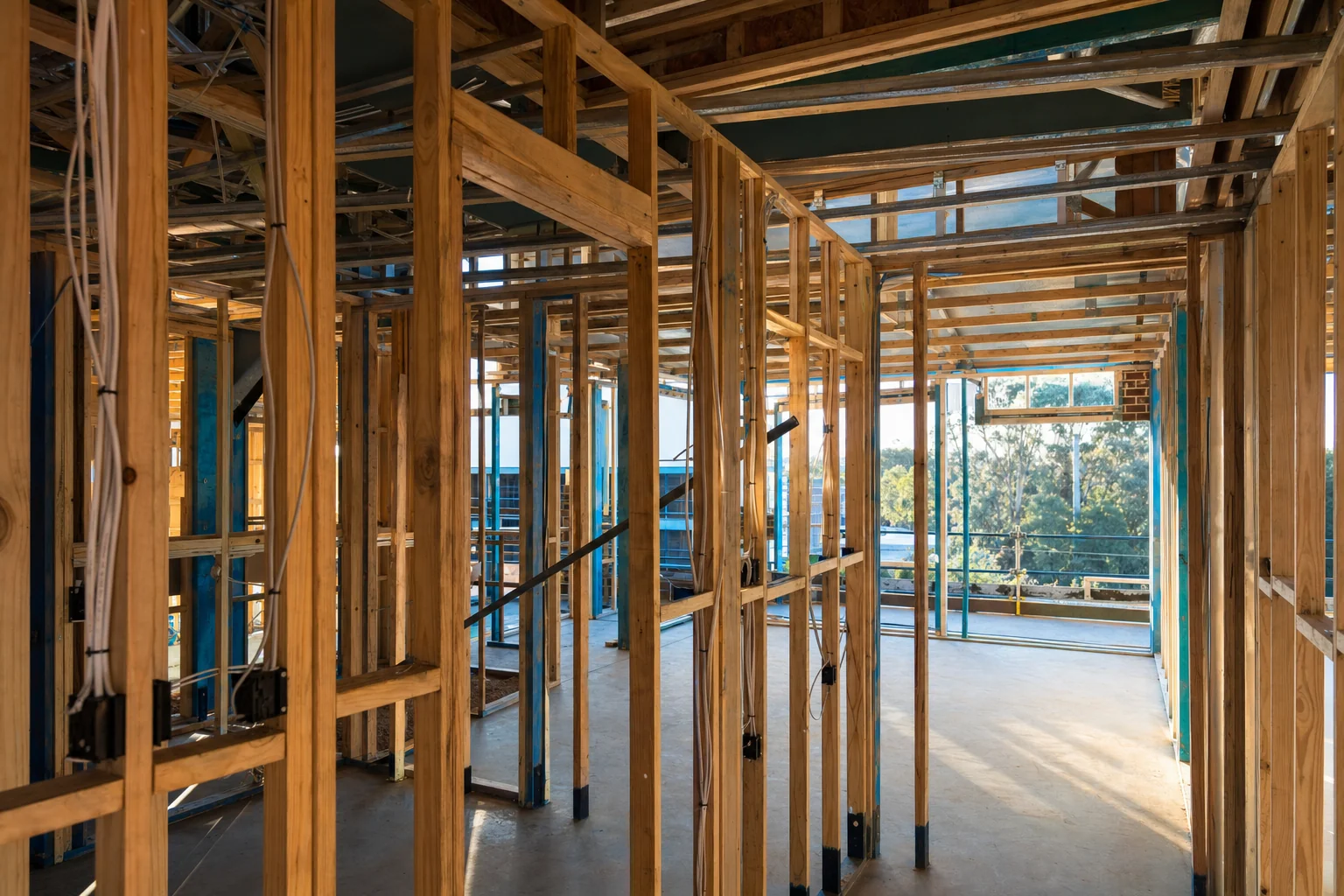
A camera cable run into a finished house means somebody crawling through a hot roof space, feeding cable down cavities and drilling eaves. In a house that is still being built, the same run is a walk along an open frame.
That is the whole argument. Same cable, same destination, a fraction of the effort, and a result with nothing visible anywhere on the outside of the house.
- Cable runs straight through open studs and joists rather than being fished through closed walls
- Camera positions are not limited by what a person can physically reach later
- Ground floor cameras on a two storey home are easy now and genuinely difficult afterwards
- Cable can drop cleanly to a recorder position on any level of the house
- Nobody has to drill an eave lining, which matters most on older homes being extended
- Conduit for a gate or letterbox run goes in before the driveway is poured or paved
Two storey homes are where the difference is largest. Once the build is finished, a camera on the ground floor of a two storey house has no roof space above it to run through, and the options narrow quickly.
When to Raise It With Your Builder
The right moment is when the electrical and data plan is being settled, which is well before lock up. Once the plasterboard is on, the easy window has closed.
Bring it up at the electrical and data walkthrough
That is when power points, lights and network points get marked on the plan. Camera positions and the recorder location belong on the same drawing.
Ask who is allowed on site and when
Builders differ on whether a separate trade can attend during construction. Some prefer to coordinate it, some are happy to give access at rough in.
Mark the camera positions on the plan
Front entry, driveway, each side access, the rear alfresco, the garage. Positions on paper cost nothing to change.
Nominate the recorder location
It needs a power point and a network point, so both have to be on the electrical plan rather than added later.
Get the cable in at rough in
Cable is run and left coiled and labelled at each position while the frame is still open. Nothing is fitted yet.
Book the fit off after painting
Cameras, recorder and setup happen near handover, once the painters are finished and the scaffold has gone.
Cable now, cameras later
These are two separate visits and it is worth understanding why. Cable goes in while the house is open, which is quick. Cameras go on at the end, because anything mounted during the build gets covered in dust, knocked by other trades or painted around.
Where the Recorder Should Live
The recorder is the part people forget to plan for, and it is the one with real requirements. It is a box roughly the size of a thick hardback with a hard drive inside that runs constantly.
- A power point at the location, which is the only mains power the camera system needs
- A network point or a clear path back to where the modem will live, so the phone app works
- Air around it, because a drive running around the clock in a sealed cabinet in February will overheat
- Somewhere out of the way but reachable, since you will occasionally want to export footage to a USB stick
- Not in direct sun, and not in an uninsulated garage roof space if it can be avoided
- Somewhere reasonably secure inside the house rather than in an outbuilding
A study cupboard, a walk in linen press, a laundry cupboard or a garage wall are all common choices. Where a home has a proper data cabinet, that is usually the natural home for it as long as the cabinet is ventilated.
It is worth putting the recorder near the modem if you can. That keeps the network run short and makes life simpler if your internet equipment ever moves.
Cable Runs Worth Putting In Now
While the walls are open, cable is the cheap part of the job. Adding a run to a position you are not certain about is far less expensive now than a return visit in three years.
| Run | Why put it in now | Cost of leaving it |
|---|---|---|
| Front entry and porch | Your highest value identification shot | Low, since it is usually reachable later |
| Driveway and garage | Vehicles, plates and whoever gets out | Moderate, depending on the roof above it |
| Both side accesses | The pinch points onto the block | Moderate, and narrow side runs are awkward to work in |
| Rear alfresco | The part of the block nobody can see from the street | Moderate to high on a two storey home |
| Ground floor of a two storey | There will be no roof space above it once built | High, and sometimes it means external conduit |
| Front gate or letterbox | Conduit has to be in before paving or concrete | Very high once the driveway is down |
| Shed, studio or granny flat | The trench is open while the site is | High, since it means digging up a finished yard |
Scroll the table sideways to see every column.
A spare run to a position you might use is worth considering too. Pool areas, a future shed and a second driveway are the ones people most often wish they had allowed for.
Renovations and Half Open Walls
A renovation is a partial version of the same opportunity. Part of the house is open and part of it is not, and the aim is to use the open part well.
Perth renovations often mean an extension at the back, a new alfresco, or opening up the rear of an older double brick home. Every one of those creates a path for cable that will not exist again.
- Run cable through the new section while it is open, even to cameras on the old part of the house
- A new alfresco or patio roof is an easy place to conceal a run to a rear camera
- Where an older home has eave sheeting that may contain asbestos, planning a route that avoids drilling it is far easier while trades are on site
- New paving or decking is the moment to put conduit in the ground for anything at the boundary
- A rewire or a switchboard upgrade is a natural time to sort the recorder location and its power point
- Older homes sometimes have very tight roof access, and a reno is the chance to leave a usable path behind
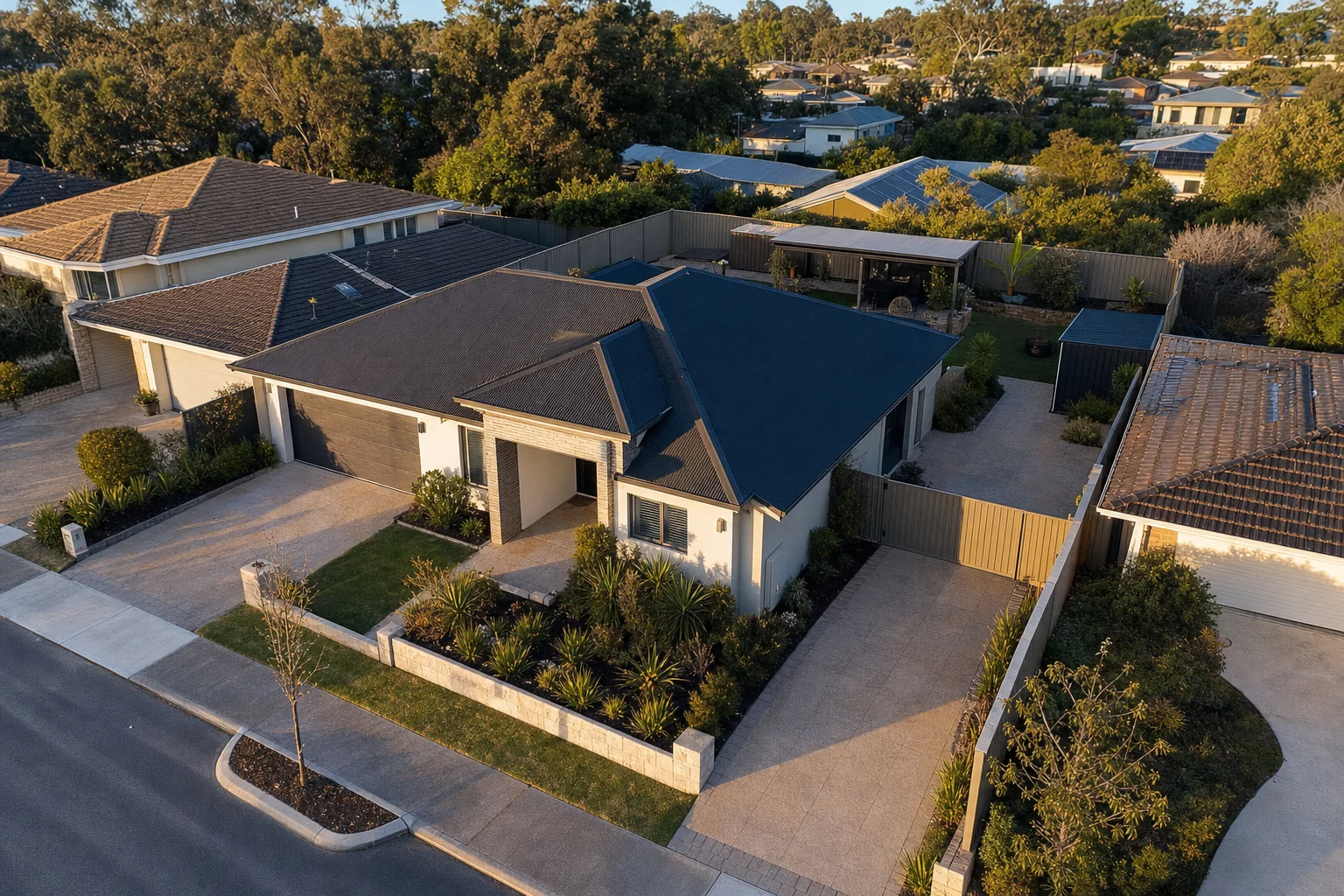
The other thing renovations do is change the shape of your block. A new gate, a new side path or a new rear access all change where cameras should go, so the layout is worth revisiting rather than reusing.
Gates, Driveways and the Front Fence
Anything at the boundary needs conduit in the ground, and the ground is only convenient once. Once the driveway is poured or the paving is laid, that run becomes a much bigger job.
Perth blocks throw up limestone, reticulation lines and established roots, so the route gets planned on site rather than assumed from a drawing.
- Conduit under the driveway before it is poured or paved, even if you are not fitting a gate camera yet
- A run to the front gate for an intercom, which is what you want if the fence is locked or the house sits well back
- A draw wire left in any empty conduit so a cable can be pulled through later without digging
- Reticulation planned around the conduit rather than through it, since water lines and camera cable in one trench cause problems later
- Power at the gate if an automatic gate motor is going in, which the intercom can often be wired to trigger
- Conduit sized generously, because pulling a second cable through a tight run later is difficult
Long driveways are the classic case. On a battle axe block, a camera at the house cannot see the street end, and the only sensible time to get cable out there is while the site is open.
What Happens After Handover
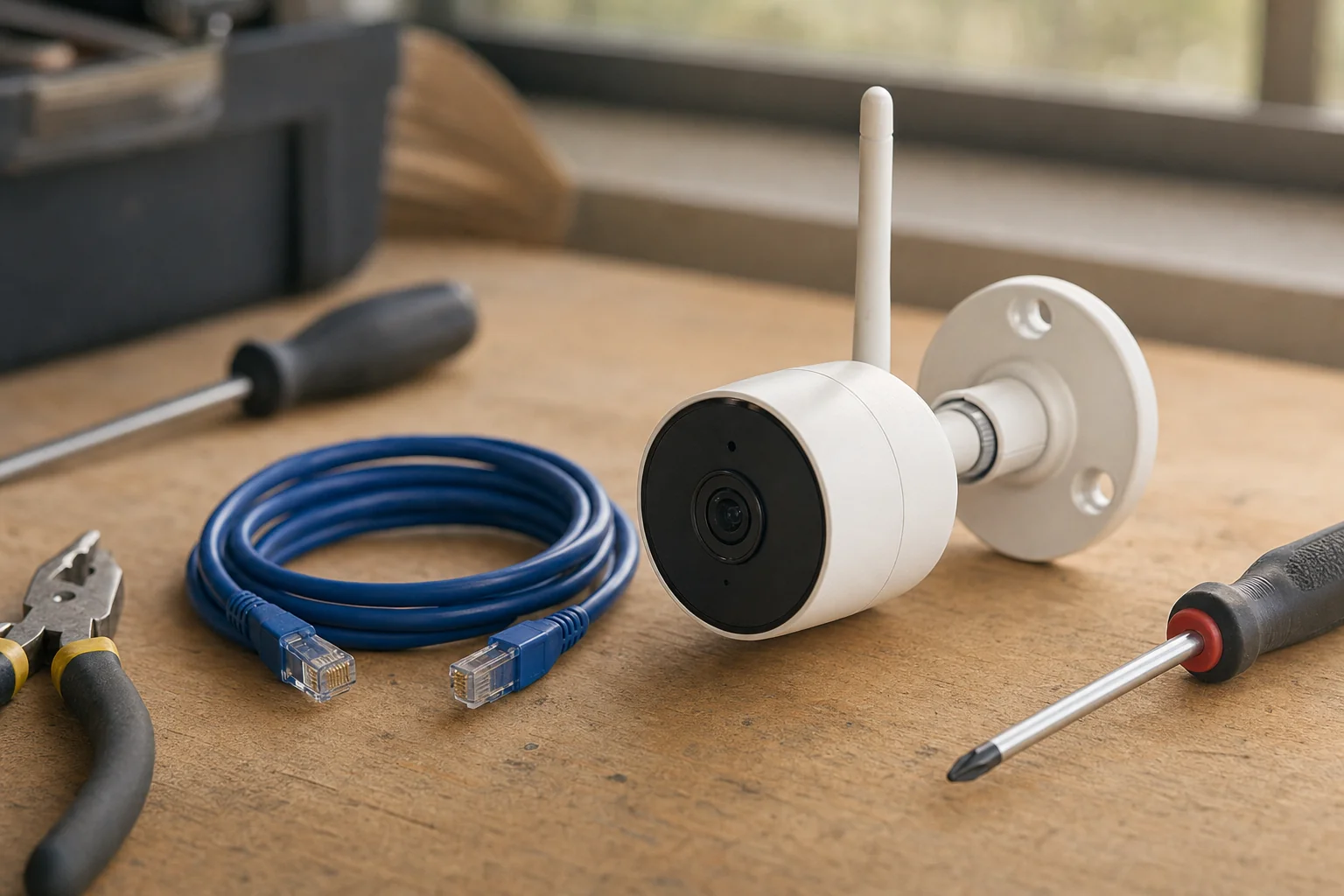
With the cable already in, the fit off is a short and clean visit. There is no roof space crawl and no drilling into finished eaves.
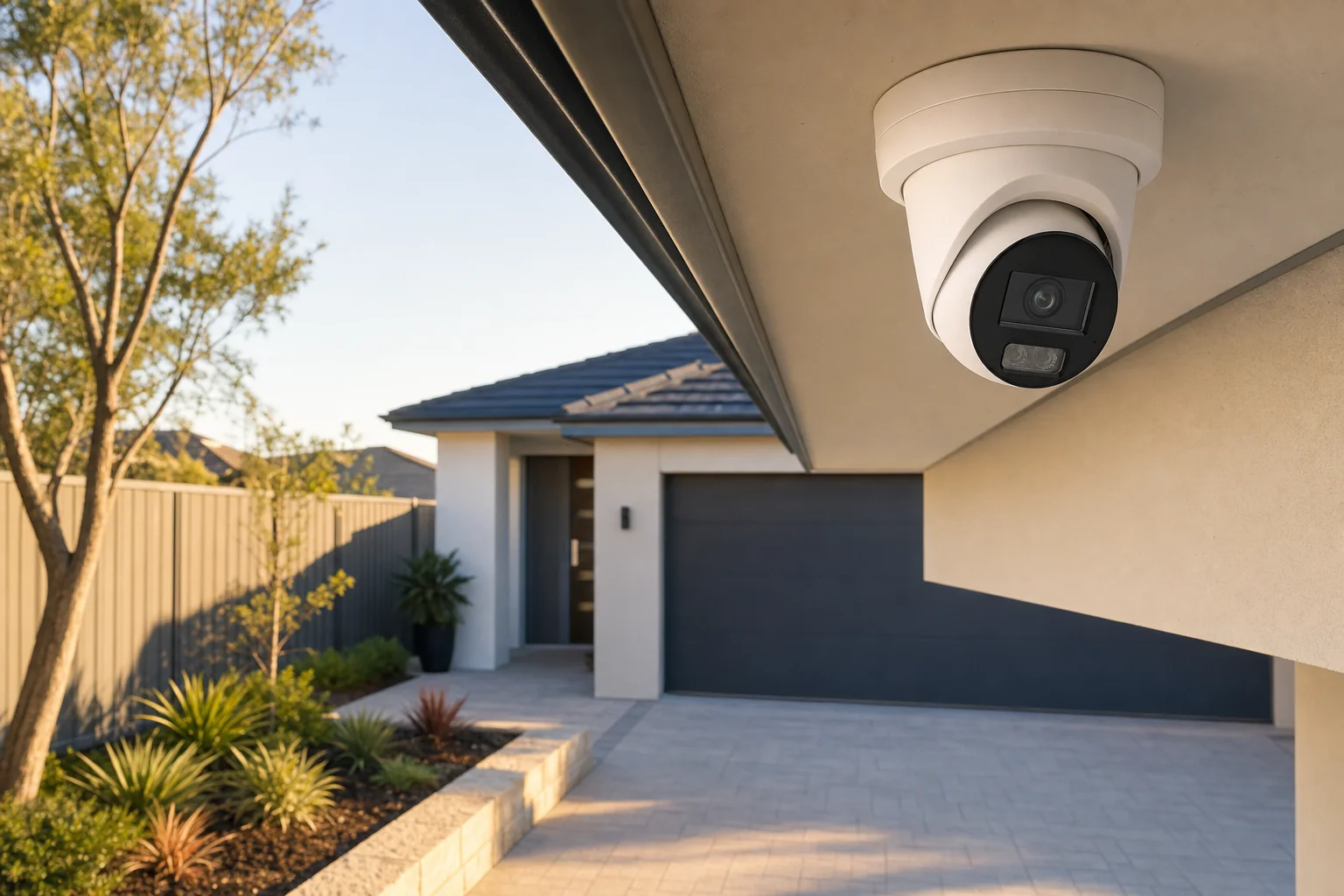
- Cameras are mounted on the positions the cable was run to and aimed on a screen, one at a time
- The recorder goes into its planned home, gets power, and is connected to the modem
- The hard drive is set to record and the clock is checked, because footage with a wrong timestamp is worth very little
- Every camera is checked after dark as well as in daylight
- Detection areas are trimmed and alerts tuned so the street does not set them off
- The app goes onto the phones of everyone in the household who wants it
Building or renovating is the one time you get to do this properly with no compromises. If your plans are still being drawn, that is the right moment to talk about it rather than the week before handover.
We are happy to review plans and mark up camera positions and cable runs before anything is built. The quote is free and it goes in writing.
Free written quote
Want the Property Assessed
We walk the property with you, work out the positions, and put the number in writing before anything is touched.
Questions People Ask
When should CCTV wiring go into a new build?
At rough in, before the wall and ceiling linings go on. That is the same stage as electrical and data, and it is the point where cable can be run through open framing with no crawling and no drilling into finished surfaces. The cameras and recorder themselves get fitted near handover, once painting is done and the scaffold has gone.
Do I need to tell my builder I want cameras?
Yes, and the earlier the better. Camera positions and the recorder location need to be on the electrical and data plan, since the recorder needs a power point and a network connection. Builders differ on whether a separate trade can attend during construction, so it is worth asking how they prefer to coordinate it.
Can cable be run to the front gate later?
It can, and it is far more work once the driveway is down. A run to the gate needs conduit in the ground, and Perth blocks commonly have limestone, reticulation and mature roots to work around. Putting conduit in while the site is open, with a draw wire left inside it, keeps the option open even if you are not fitting a gate camera yet.
Should I run cable to positions I am not sure about?
While the walls are open, usually yes. Cable is the cheap part of the job at that stage and a spare run costs far less than a return visit through a finished house. Pool areas, a future shed and a second driveway are the positions people most often wish they had allowed for.