
Alarm Systems Perth
Residential CCTV and security camera installation
A house alarm fitted on its own or wired in with your cameras, so an alert comes with a picture.
Free written quote
Get a Quote for an Alarm System
Tell us whether you want an alarm on its own or wired in with cameras, and which doors and windows you care about most.
We walk the house, work out where the sensors and the panel go, then put the whole thing in writing before any work starts.
- Free written quote before any work starts
- All of Perth covered
- Cabling hidden through the roof space
- We show you how to use it before we leave
Alarm Systems in Perth
An alarm and a camera system do two different jobs.
- The alarm tells you something has happened
- The cameras tell you what it was
- Run together, they cover each other's weak spot
We fit new alarms, and take over old panels that are still sound. The plan and the price go in writing first.
Scoping
How Much Alarm a Home Like Yours Needs
Sensors follow the floor plan, so the shape changes with the house.
Unit or small home
One or two ways in
- Sensors on the doors that actually get used
- One detector covering the main living space
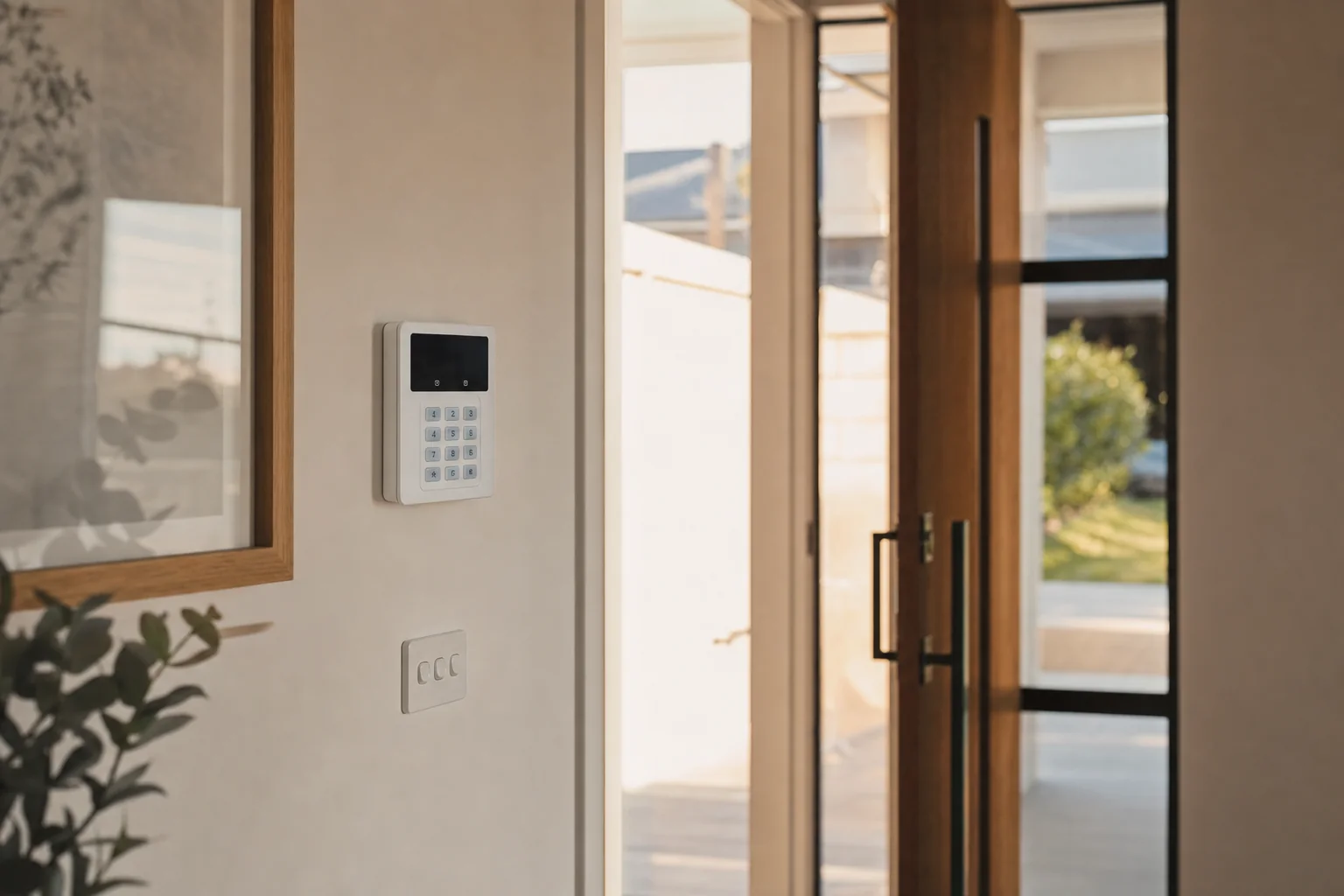
- Keypad by the door you leave from
Family home
Several ways in
- Every external door and the sliding door covered
- Detectors in the halls rather than in every room
- Zones set so you can arm the house while you are in it
Larger or two storey
More zones
- Upstairs and downstairs armed separately
- Garage and shed brought onto the same panel
- Sirens placed so they carry to the street
Sensor positions come from your floor plan, not from a package. We walk the house and write it down.
- Best for
- Homes that want detection as well as footage
- Sensors
- Wired or wireless, chosen to suit the house
- Pets
- Detectors selected to suit a dog or cat at home
- Quote
- Free and in writing before we start
Worth a look
Signs an Alarm Is Worth It
Cameras tell you what happened. An alarm interrupts it.
The house sits empty right through the middle of the day.
There is a sliding door at the back that nobody can see.
You have cameras but nothing that makes a noise.
The old panel beeps and no one has the code for it.
The last system kept going off at the dog so it got switched off.
You want the shed or the granny flat on the same system.
What you get
How We Do Alarm Systems
Alerts That Come With Pictures
An alert is never just a noise. You can see what caused it before you do anything about it.
Sensors Placed to Avoid False Alarms
Worked out room by room, away from sunny windows and air conditioning vents, rather than by counting doors.
Pets Accounted For
A dog or cat inside gets designed for at the start, so you can still arm the house.
You Get Shown How to Arm It
An alarm nobody understands is an alarm nobody turns on. Everyone in the house gets walked through it.
A Free Written Quote First
Sensor count, positions and what the panel is doing, all in writing before any work starts.
Your Zones Written Down
A plain list of what each zone covers, plus where the panel and its backup battery live.
Placement
Where the Sensors Go in a Perth House
An alarm is only as good as its layout. Three positions do most of the work in a standard home.
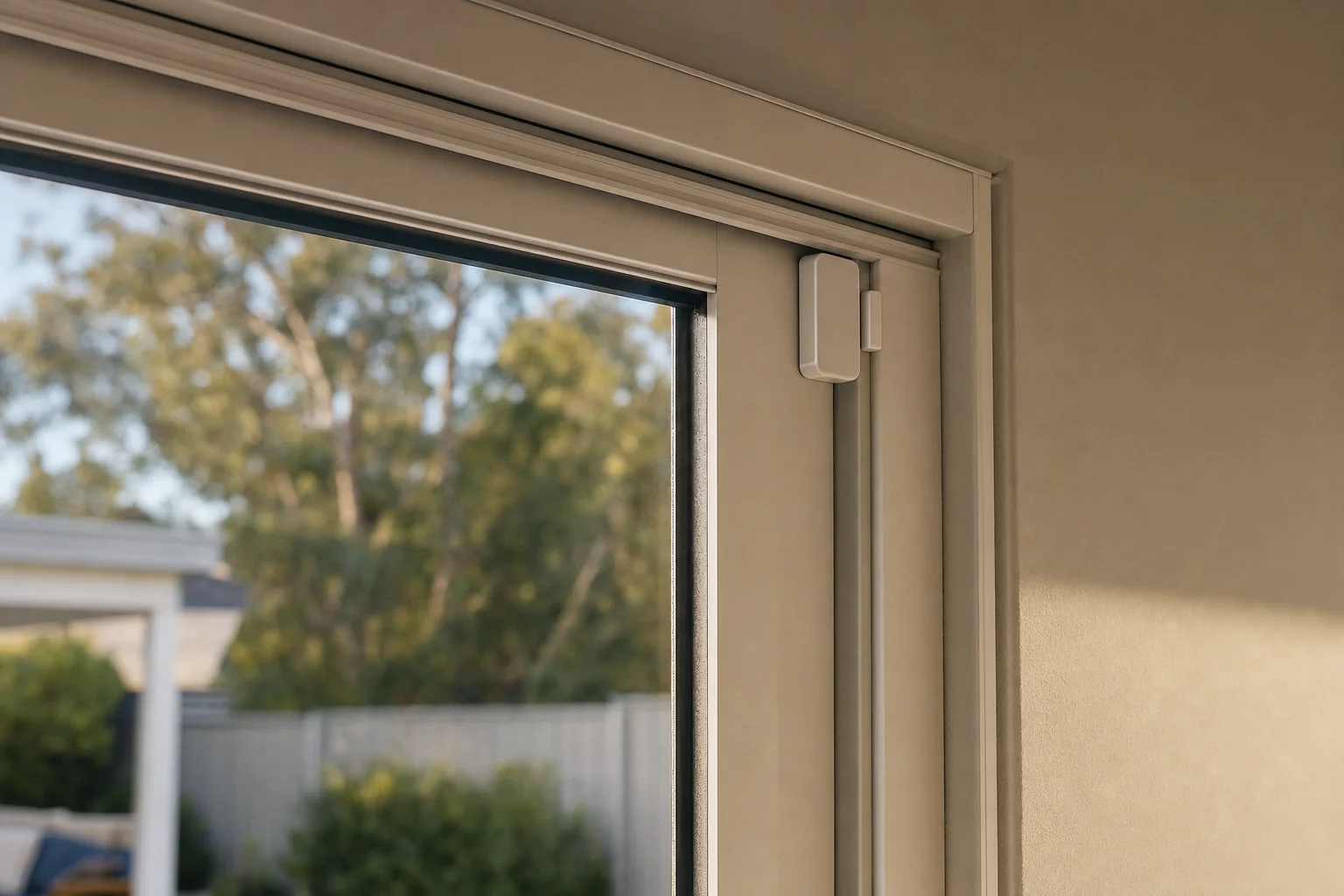
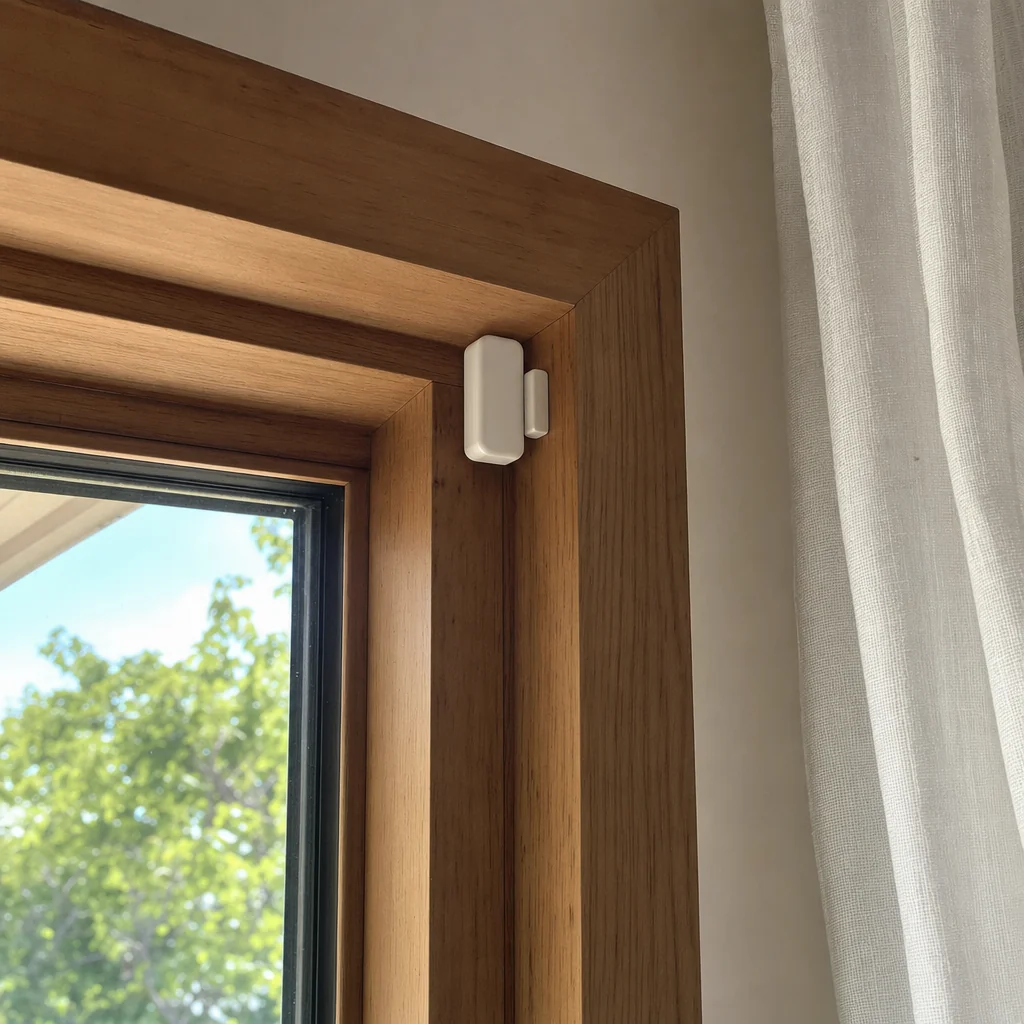
Sliding doors at the back are worth a contact of their own. They are the quietest way into most Perth houses.
- 1
A contact on the front door
It tells the panel the door opened, and that is all it does. Simplest part of the system and the part that catches the most.
- 2
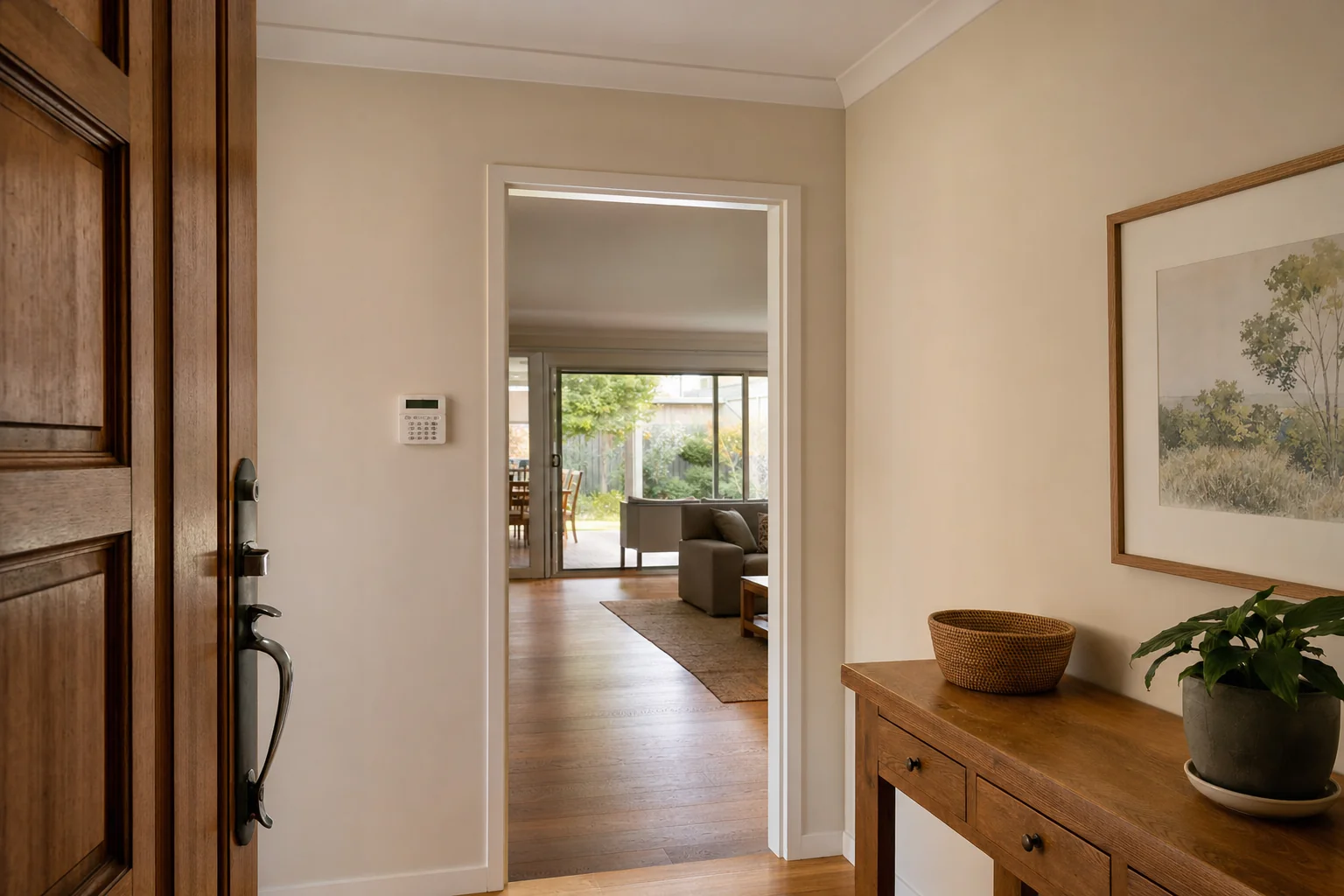
The keypad where you walk in
Inside the door you actually use, not the formal one. An alarm you have to walk past a sensor to disarm is an alarm you stop setting.
- 3
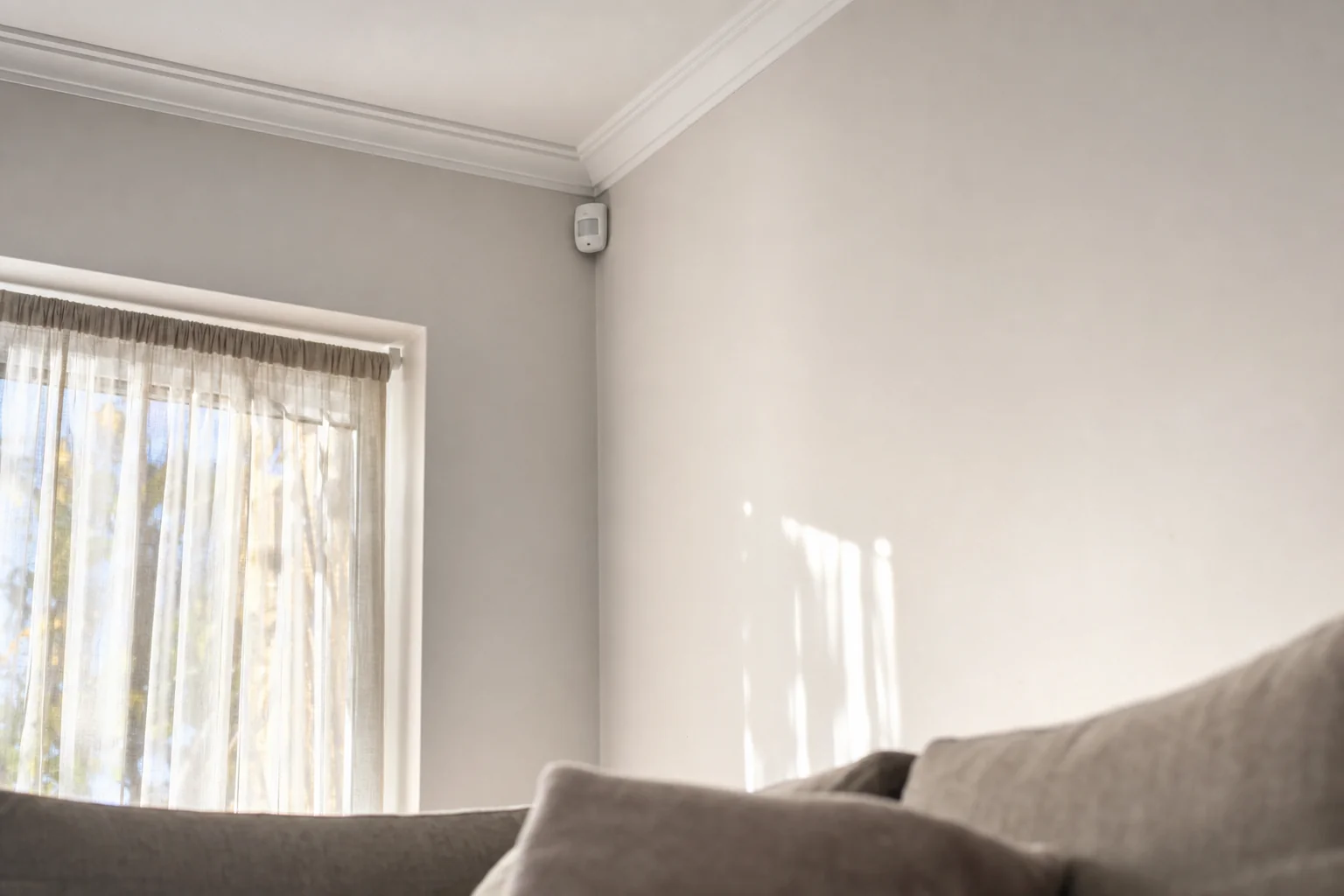
Motion, high and looking across
Up near the ceiling reading across a room rather than straight down a hallway. Movement across a sensor is what it reads best.
False alarms
What Sets an Alarm Off That Should Not
Almost every alarm people stopped using stopped because it cried wolf. All three usual causes are placement rather than the sensor.
- Sun tracking across a wall
- A sensor reads heat that moves. A patch of afternoon sun crossing a wall is heat that moves, so the sensor gets aimed away from where the sun lands.
- Air moving over something warm
- Ducted vents, heaters and a fridge in line of sight all give a sensor something to see. Position fixes it. Turning the sensitivity down only hides it.
- Pets, when nobody mentioned pets
- There are ways to set a house up around a dog, but they have to be chosen at the start rather than argued with afterwards.
Common Questions About Alarm Systems
Can I have an alarm and cameras on the same system?
They are usually two separate systems that work alongside each other, both reaching you through apps on your phone. Some setups can go further and have an alarm trigger tell the camera recorder to flag that moment in the footage.
Either way, the pairing is what matters: the alarm tells you something happened, the cameras tell you what it was.
Will the alarm go off because of my dog?
Not if it is designed around the dog from the start. Pet tolerant motion detectors are made to ignore an animal under a certain size while still picking up a person, and they need to be mounted at the right height and angle to do it.
Tell us about your pets when we quote, including where they sleep and whether they have the run of the house at night.
Do I need to run cable through my walls?
Not necessarily. Wireless sensors mount to the surface and talk back to the panel on their own signal, which suits existing double brick homes where getting cable down an internal wall is a real job.
Wired sensors are the better choice in a new build or a renovation where the walls are still open. Mixing the two is common.
Can you take over the alarm the previous owner left?
Often, yes. If the sensors and their cabling are still in good condition, a new panel and keypad can frequently reuse them, and that costs a lot less than starting from scratch.
We test what is there before quoting. Where the existing equipment is too old or has been partly removed, we will show you why it needs replacing.
What happens when the power goes out?
The panel has a backup battery inside it so the alarm keeps working through an outage. That battery is a wear part and needs replacing every few years.
If an old alarm has started beeping or chirping for no clear reason, a flat backup battery is the most common explanation.
Does the alarm need the internet?
The alarm itself works without it, since the siren, the sensors and the panel are all local to your house. What you need the internet for is the phone alerts and arming or disarming remotely.
If the internet drops out, the alarm still detects and still sounds, you just will not get the notification until it is back.
Can I set the alarm at night while we are asleep inside?
Yes, and that is what a part arm or home mode is there for. It keeps the sensors on the doors and windows live while ignoring the motion detectors in the parts of the house you walk through at night.
The zones get grouped around how your household moves, so a trip to the bathroom does not wake the street. We run through it with you so everyone knows which button does which before the first night.
How will I know when a wireless sensor battery is going flat?
The panel tells you. Wireless sensors report a low battery back to the panel, which flags it on the keypad and, on newer systems, in the app as well.
They take common battery types rather than anything exotic, so swapping one is a job most people are happy to do themselves once they have been shown. We point out which of your sensors are wireless during the handover so it is never a guessing game later.
Other Things We Do
 Remote Viewing and Phone App SetupYour cameras on your phone, with alerts that are worth reading and footage you can find quickly.
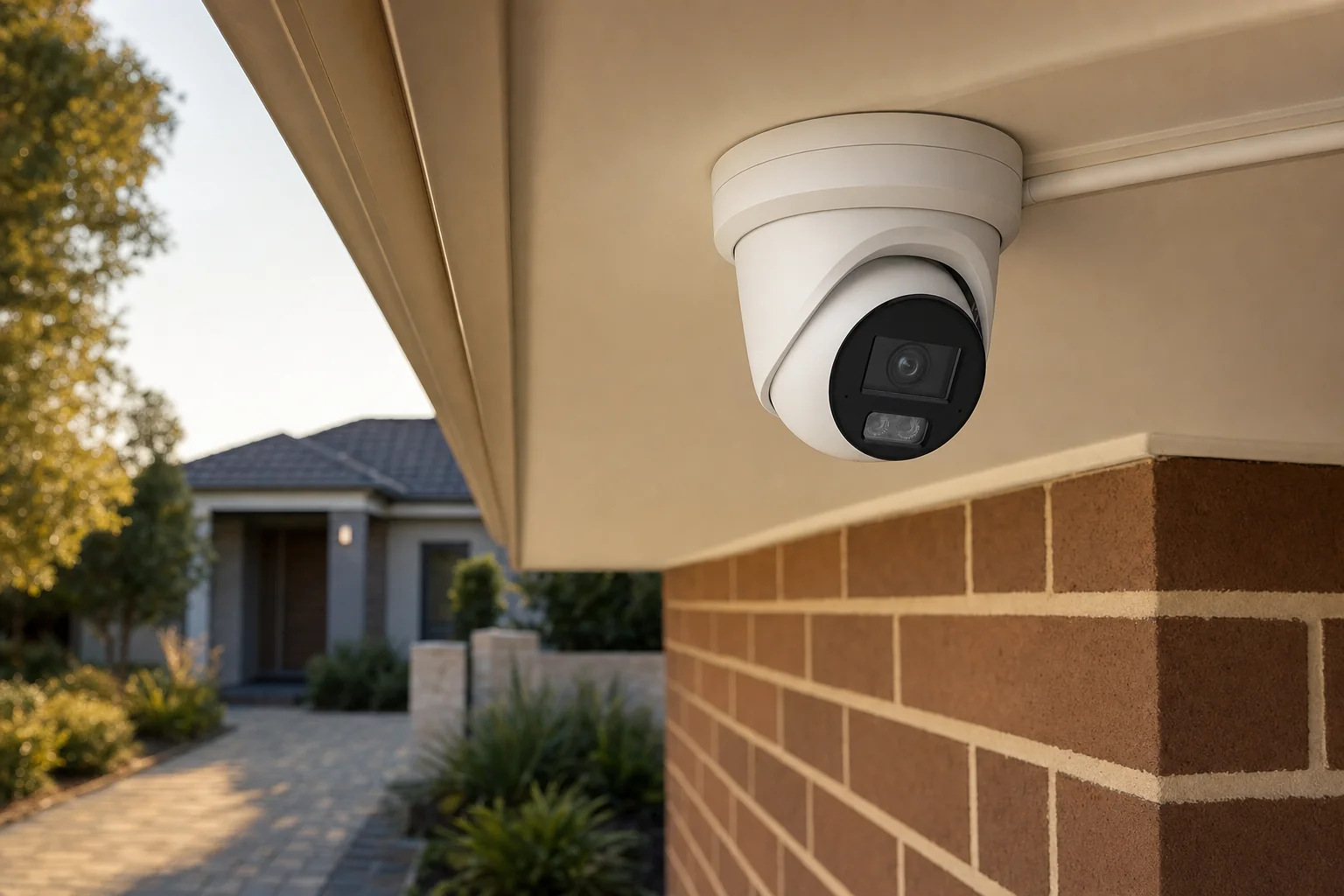 CCTV InstallationA full set of cameras and a recorder fitted to your house, with the cabling hidden in the roof space.
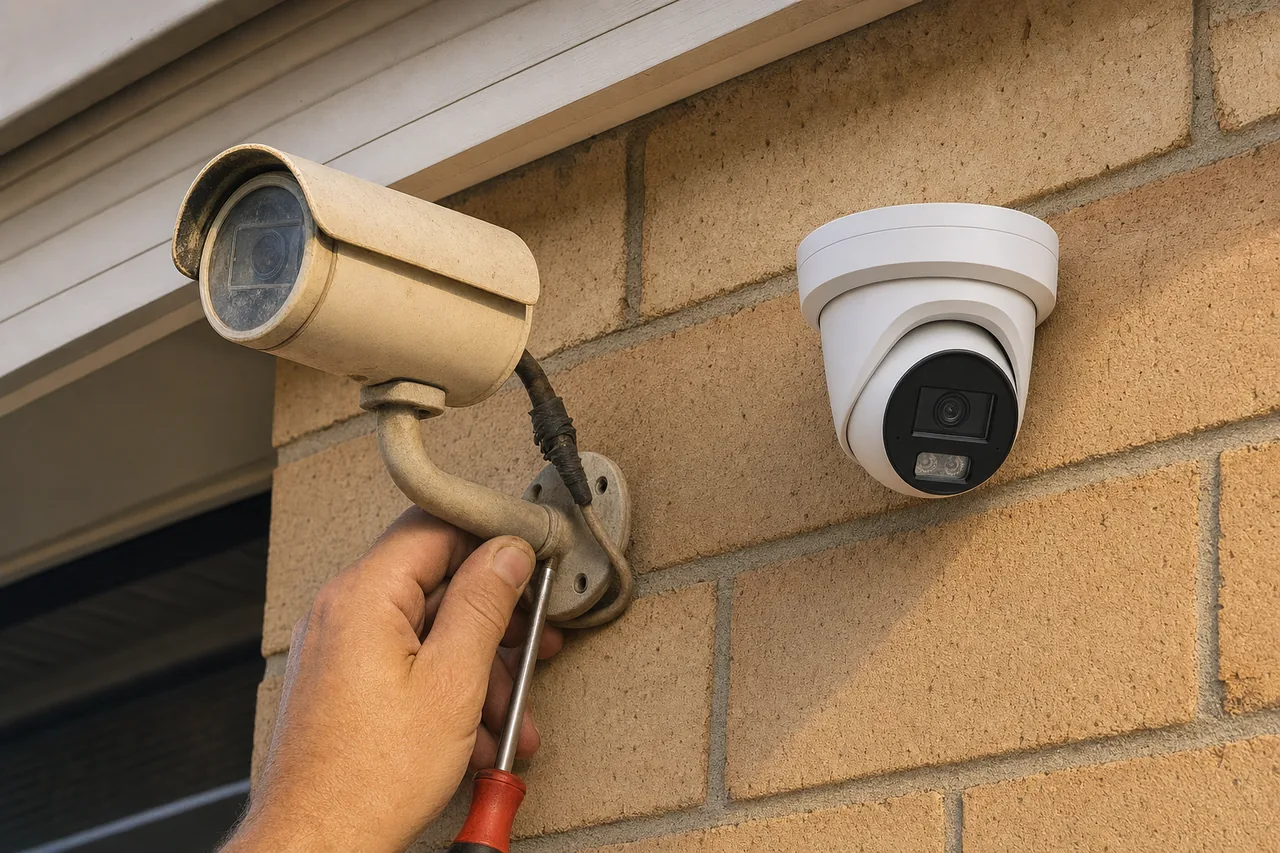 Security Camera Upgrades and ReplacementsReplace tired cameras or a dead recorder, keeping whatever part of the old system is still worth using.